
Felici di portare il progetto Clarke a Ravenna per Mikrokosmi presso il Teatro Alighieri.
Domenica 29.3.26 ore 11
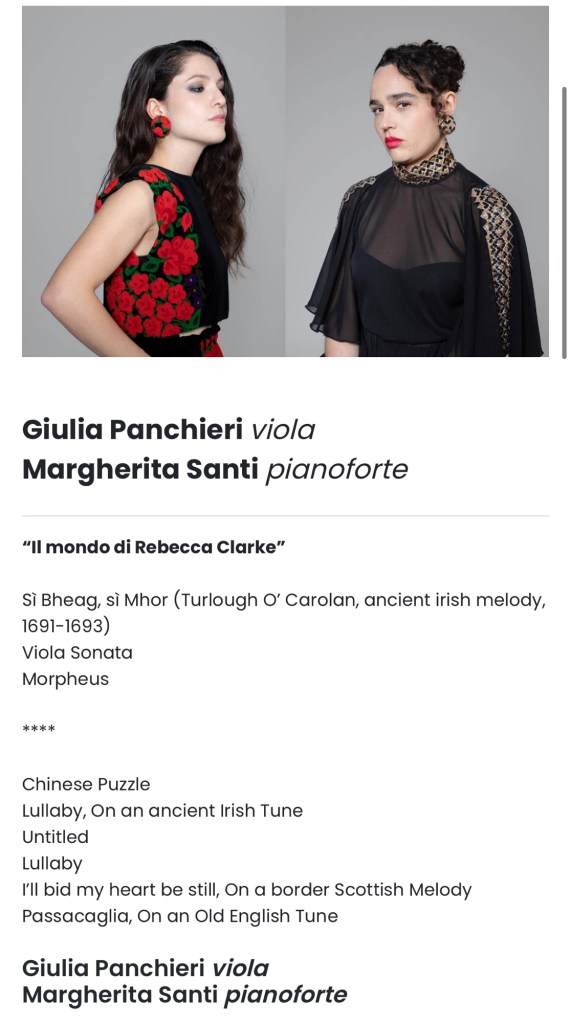
Info & tickets:
https://www.teatroalighieri.org/events/giulia-panchieri-viola-margherita-santi-pianoforte/
Felici di portare il progetto Clarke a Ravenna per Mikrokosmi presso il Teatro Alighieri.
Domenica 29.3.26 ore 11
Info & tickets:
https://www.teatroalighieri.org/events/giulia-panchieri-viola-margherita-santi-pianoforte/
From Murmann Magazine, December 2025
Musical Spaces of Freedom
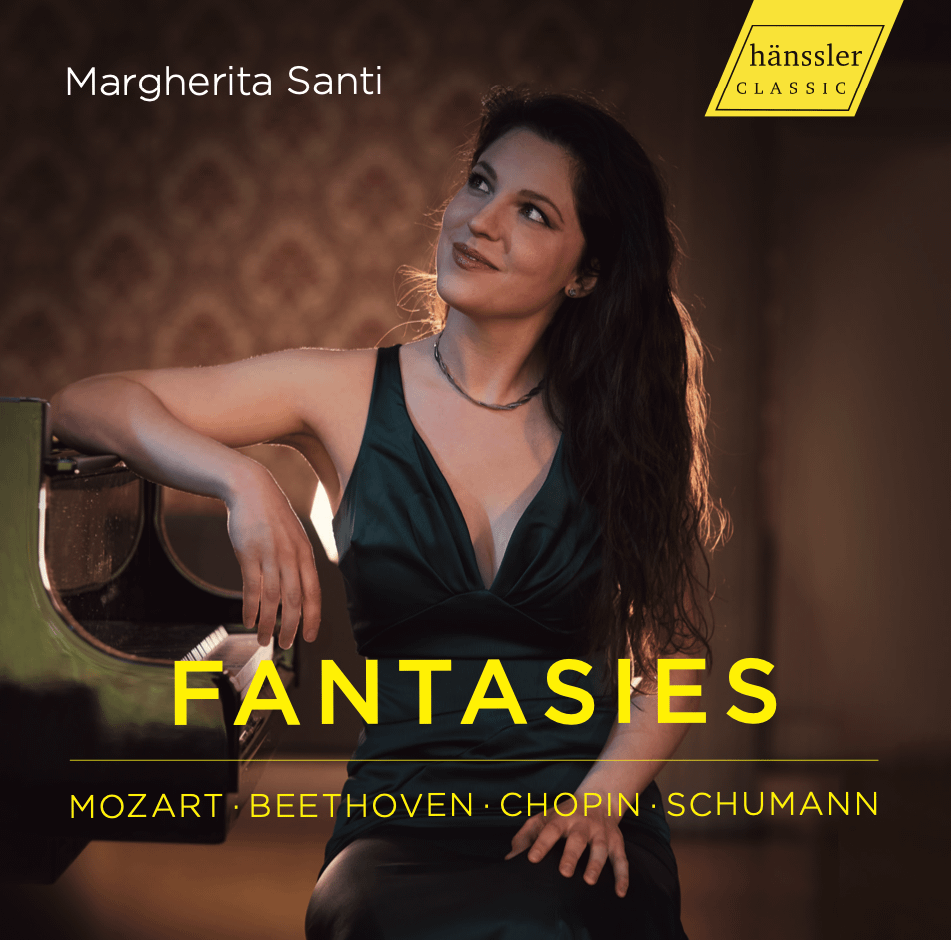
Imagining new pathways: in her first solo CD “Fantasies,” Italian pianist Margherita Santi explores musical spaces of freedom between Mozart, Beethoven, Chopin, and Schumann. Born in Verona in 1994, the artist combines technical brilliance with curiosity and a clear drive for her own musical signature—audible in every track of this finely conceived album. In conversation, Santi explains how she reads “between the lines” of the score and shapes vibrant fantasy worlds from established forms. For her, the pieces gathered on this CD are windows into other worlds, carried by inner visions and an almost spiritual energy.
The young musician also continually seeks new challenges: Santi curates her own programs, founded a festival in Verona, and is currently developing a chamber music project dedicated to Rebecca Clarke—including a collaboration with a fashion designer who translates the aesthetic of the music into fabric. Anyone wishing to experience classical music as a living art form will find in “Fantasies” and in Santi’s projects an inspiring entry point into a modern, thoughtful world of pianism.
Margherita Santi | Piano
Fantasies
Mozart | Beethoven | Chopin | Schumann
hänssler Classic 2024
–
Musikalische Freiräume
Mit Fantasie auf neuen Wegen: Die italienische Pianistin Margherita Santi erkundet in ihrer ersten Solo-CD „Fantasies“ musikalische Freiräume zwischen Mozart, Beethoven, Chopin und Schumann. Die 1994 in Verona geborene Künstlerin verbindet dabei technische Brillanz mit Neugier und einem klaren Willen zur eigenen Handschrift – hörbar in jedem Track dieses fein konzipierten Albums. Im Gespräch erzählt Santi, wie sie „zwischen den Zeilen“ der Notentexte liest und aus festen Formen lebendige Fantasiewelten gestaltet. Für sie sind die auf dieser CD versammelten Stücke Fenster in andere Welten, getragen von inneren Visionen und einer fast spirituellen Energie. Dabei sucht die junge Musikerin immer wieder auch neue Herausforderungen: Santi kuratiert eigene Programme, gründete ein Festival in Verona und entwickelt derzeit ein Kammermusikprojekt zu Rebecca Clarke – inklusive Zusammenarbeit mit einer Modedesignerin, die die Ästhetik der Musik in Stoff übersetzt. Wer klassische Musik als lebendige Kunstform erleben will, findet in „Fantasies“ und in Santis Projekten einen inspirierenden Einstieg in eine moderne, kluge Pianistenwelt.
Margherita Santi | Piano
Fantaisies
Mozart | Beethoven | Chopin | Schumann
hänssler Classic 2024
https://murmann-magazin.de/work-and-play/2025/11/kulturtipps-im-dezember/
Mit Fantasie auf neuen Wegen: Die italienische Pianistin Margherita Santigilt als außergewöhnliche Entdeckerin musikalischer Freiräume zwischen Tradition und Innovation. Ihre erste Solo-CD „Fantasies“ zeigt, wie unterschiedlich Inspiration in den Werken von Mozart, Beethoven, Chopin und Schumann aufscheinen kann. Santi, Jahrgang 1994, steht für technische Brillanz, Neugier und den Willen zur persönlichen Handschrift. Im Gespräch mit Birgit Koß spricht sie über kreative Energie, die Suche nach künstlerischer Tiefe und den Mut, klassische Musik immer wieder neu zu denken.
Feuilletonscout: Fantasie ist eine Grundlage der Kreativität und setzt viele Möglichkeiten frei. Wie wirkt sie sich auf das Klavierspiel aus – insbesondere im Bereich der Klassik, der ja durch feste Notentexte und die Intention der Komponisten geprägt ist? Gibt es da überhaupt Spielraum?
Margherita Santi: Ja, auf jeden Fall. Fantasie bedeutet für mich nicht, dass ich frei spiele, was ich will. Natürlich halte ich mich an die Noten. Aber Fantasie zeigt sich in der Art, wie ich interpretiere – wie ich zwischen den Zeilen lese, in die Ideen der Komponisten eintauche. Ich glaube, dass gerade die Stücke auf meiner CD von einer besonderen Inspirationskraft durchdrungen sind. Mozart, Beethoven, Chopin, Schumann – sie alle waren auf ihre Weise von etwas Größerem, einer inneren Vision getragen. Wenn man diese Musik hört, hat man oft das Gefühl, in eine andere Welt zu blicken.
Margherita Santi: Ich sehe in den Werken auch eine Entwicklung: Bei Mozart ist vieles noch wie improvisiert – besonders seine Fantasie in d-Moll beginnt suchend, fast tastend. Ganz anders Beethoven, der in seiner „Mondscheinsonate“ zwar eine klare Form hat, aber mit dem ersten Satz damals völlig überraschte. Bei Chopin wiederum ist die Form seiner einzigen Fantasie offen, fragmentarisch – es gibt Kontraste, einen Choral, Episoden, die fast wie Träume auftauchen und verschwinden. Und dann Schumann – er malt in seinem „Faschingsschwank aus Wien“ förmlich Bilder mit Klängen. Da wird die Fantasie fast zur Bühne voller Charaktere.
Feuilletonscout: Kannst du diese Charaktere beschreiben, die in Schumanns „Faschingsschwank aus Wien“ auftauchen?
Margherita Santi: Sehr gern. Der erste Satz ist wie ein Festzug – marschartig, farbenfroh. Dann gibt es einen ruhigeren Abschnitt, der fast wie eine intime Reflexion wirkt, mit einer dichten Harmonik, die für mich wichtiger ist als jede Melodie. Das „Scherzino“ ist dagegen witzig und verspielt, aber auch voller Intelligenz – fast verschmitzt. Der vierte Satz ist leidenschaftlich und tief. Man spürt, dass Schumann in dieser Zeit sehr verliebt war – auch das fließt ein. Der Klang muss hier tief und mutig sein. Und dann das Finale: voller Virtuosität, ein einziger Befreiungsschlag – wie ein einziger Atemzug bis zum letzten Ton. Und zwischendrin entdecke ich immer wieder kleine Motive, fast wie Vogelrufe – hohe, helle Töne, die für mich etwas sehr Natürliches haben. Schumann hat sich ja auch viel mit Natur beschäftigt, zum Beispiel in seinen „Waldszenen“. Ich glaube, seine Musik ist voller Bezüge – auch zu seinen anderen Werken. Für mich ist es wichtig, ein Stück nicht isoliert zu sehen, sondern es im Zusammenhang mit Kammermusik, Konzerten und Liedern zu verstehen. Das gilt übrigens für alle Komponisten, die ich spiele.
Feuilletonscout: Du bist noch sehr jung – wie kam es zu deiner ersten CD? Wie lange hast du an diesem Projekt gearbeitet?
Margherita Santi: Die Idee ist über mehrere Jahre gewachsen. Ich wollte ein Album machen, das mehr ist als nur eine Sammlung schöner Stücke – etwas, das meine persönliche Sicht auf Musik widerspiegelt. Die Fantasie als Thema erschien mir perfekt, weil sie sowohl das Künstlerische als auch das Spirituelle anspricht. Ich glaube, dass Komponieren – und auch Interpretieren – eine Art Verbindung zu einer höheren Kraft sein kann. Manche nennen es Intuition, andere Inspiration oder Energie. Drei Jahre lang habe ich an der Idee gearbeitet, natürlich nicht ununterbrochen, aber sie war immer präsent. Und ja, es ist meine erste „richtige“ CD. Es gab zwar eine frühere Aufnahme, als ich noch sehr jung war, aber dieses Album ist mein erstes wirklich durchdachtes, künstlerisch konzipiertes Projekt. Es ist auch ein Spiegel meiner persönlichen Entwicklung in dieser Zeit.
Feuilletonscout: Du hast sehr früh angefangen zu spielen – ein Wunderkind?
Margherita Santi: (lacht) Vielleicht. Es gibt keine Musiker in meiner Familie – ich war das schwarze Schaf, im positiven Sinne. Mit fünf Jahren wollten meine Eltern, dass ich ein Hobby finde – Tanz, Sport oder Musik. Ich habe mich für Klavier entschieden. Ganz zufällig kamen wir zu einer sehr renommierten Lehrerin. Sie war damals schon älter, aber sie hat mein Talent erkannt und mich zehn Jahre lang begleitet – bis zum Diplom mit 15 oder 16 Jahren. Erst später, mit 16 oder 17, begann ich, selbst Fragen zu stellen: Will ich wirklich Musikerin sein? Ich habe zwei Jahre in Moskau studiert, dann folgte eine Zeit der Unsicherheit. Ich war auf der Suche nach meinem eigenen Weg. Die Wendung kam durch ein Kammermusikprojekt. Ich war eingeladen, mit anderen Musikerinnen zusammenzuarbeiten – und das hat mich zurück zur Musik gebracht. Seitdem liebe ich sowohl das Solospiel als auch die Kammermusik.
Feuilletonscout: Könntest du dir vorstellen, ein eigenes Ensemble zu gründen?
Margherita Santi: Ein festes Ensemble habe ich nicht, aber ich arbeite regelmäßig mit verschiedenen Musikerinnen zusammen. Aktuell entsteht ein neues Kammermusikprojekt, das mir sehr am Herzen liegt. Es geht um die britisch-amerikanische Komponistin Rebecca Clarke. Wir nehmen ein Album mit ihren Werken auf – für Geige, Bratsche und Klavier. Ihre Musik ist sehr eigenständig, mit Einflüssen von Debussy, Ravel oder Franck, aber auch mit Elementen aus britischer Volksmusik. Sie war eine starke Frau, die sich in einer männerdominierten Welt behauptet hat – eine der ersten professionellen Bratschistinnen in einem Londoner Orchester.
Feuilletonscout: Das klingt nach einem sehr persönlichen Projekt. Ist das die Richtung, die dich generell interessiert – eigene Programme, eigene Kontexte statt reiner Reproduktion bekannter Werke?
Margherita Santi: Absolut. Ich glaube an individuelle Projekte – das ist auch meine Art, mit klassischer Musik umzugehen. Natürlich kann man Beethovens Sonaten spielen – das tue ich auch. Aber ich frage mich: Was kann ich neu erzählen? Welche Werke gehören für mich zusammen, wo entsteht ein neuer Blickwinkel? Ich habe vor acht Jahren ein Festival in Verona gegründet und arbeite auch als künstlerische Leiterin. Daher sehe ich Musik nicht nur aus der Perspektive der Pianistin. Es geht auch um die richtige Kommunikation. Wie bringe ich klassische Musik heute zum Publikum? Für mich heißt das: nicht oberflächlich oder effekthascherisch, aber zugänglich. Ich will keine Pop-Version der Mondscheinsonate – aber ich will, dass Menschen spüren, wie tief diese Musik ist. Und dafür braucht es manchmal ein neues „Kleid“, wie ich es nenne – einen neuen Rahmen.
Feuilletonscout: Und dazu gehört auch Mode? Du hast für das Rebecca-Clarke-Projekt mit einer Designerin zusammengearbeitet.
Margherita Santi: Ja, genau. Wir haben für das CD-Cover mit der Modedesignerin Miljana Jankovic aus Kopenhagen gearbeitet. Sie hat Kleider entworfen, die die Stimmung und Ästhetik der Musik spiegeln – modern, aber mit traditionellen Elementen, handgemacht, fast folkloristisch. Diese Verbindung von Musik und visueller Kunst fand ich sehr spannend. Es geht nicht darum, hübsch auszusehen, sondern eine zusätzliche Ebene der Interpretation zu schaffen. Vielleicht tragen wir diese Kleider auch bei Konzerten – wir überlegen das noch. Jedenfalls soll es keine bloße Show sein, sondern ein sinnvolles Zusammenspiel von Ausdrucksformen. Ich glaube, das kann Menschen auch auf einer anderen Ebene erreichen.
Feuilletonscout: Also gehen dir die Ideen nicht aus?
Margherita Santi: Ganz im Gegenteil – ich habe viel zu viele Ideen und zu wenig Zeit! Aber das ist auch schön. Ich liebe diese kreative Energie, und ich hoffe, sie bleibt mir noch lange erhalten.
Since Rebecca Clarke’s Viola Sonata entered the twentieth-century repertoire it’s enjoyed many fine and very divergent recordings. This latest version from the youthful Italian team of Giulia Panchieri (viola) and Margherita Santi (piano) exemplifies a trend for stable tempi that ensure the work takes around 22-23 minutes, as do, to take a couple at random, the pairings of Tabea Zimmermann and Kirill Gerstein on Myrios Classics and Judith Ingolfsson and Vladimir Stoupel on Oehms. This sensible approach, therefore, avoids the extremes of Matthew Jones (20:30) and Philip Dukes (27 minutes), both of them on Naxos. I mention this only to suggest that the sonata has encouraged a gratifyingly wide range of interpretive stances though also to imply my preference.
As well as their pragmatic tempi, the Italian pairing evoke the impressionistic as well as the declamatory elements of the Sonata very well. Santi’s piano chording is evocative and Panchieri’s tone is well-centred and capable of folkloric extension in the sonata’s pastoral moments. Rightly they take the central Scherzo at a vivid tempo, their ensemble is solid and they bring a fluid approach to the finale, etching its episodes with youthful verve, whether in the opening Adagio or in the vitality of the Allegro. I’m not shifting my allegiance from the Zimmermann-Gerstein team but this is a welcome addition to the discography.
The album is devoted to the music for violin, viola and piano so contains a number of smaller pieces from two main periods of her compositional life – 1913-24 and 1941-44. It was probably her focus on chamber music – she was a leading violist and made a recording as such in the 1920s – and on song composition that led her away from writing orchestral music but what she wrote has great distinction. There’s the evocative Lullaby for violin, played with warmth by Ekaterina Valiulina and the quietly melancholic Lullaby (arrangement of an ancient Irish Tune) for the viola. The sliver of a Chinese Puzzle explores the vogue for chinoiserie and Midsummer Moon exudes Vaughan Williams-like flourishes.
The works from the 1940s date from her emigration to America. The Passacaglia on an Old English Tune is noble and elevated whilst the lovely I’ll Bid My Heart Be Still is as moving as ever and, as here, all the better when not played too quickly. The three musicians finally come together in the Trio Dumka, a lively, colourful work that explores the dumka without undue seriousness but ends quietly and a touch withdrawn. Given the date of composition I’ve always wondered whether it was intended as a tribute to Dvořák, the centenary of whose birth fell that year.
This is an attractive contribution to Clarke’s increasing representation on disc. If the recording quality is rather too up-front for my tastes, the performances provide sensitivity and athleticism. Individual allegiances may lie elsewhere (Tabea Zimmermann for the Sonata, Lorraine McAslan for the violin works) but this will make a good and relatively inexpensive entrée for those unfamiliar with her work.
Jonathan Woolf
Article here: https://www.swr.de/kultur/musik/rebecca-clarke-musik-fuer-violine-viola-klavier-100.html
A new feature from SWR Kultur:
https://www.swr.de/kultur/musik/rebecca-clarke-musik-fuer-violine-viola-klavier-100.html
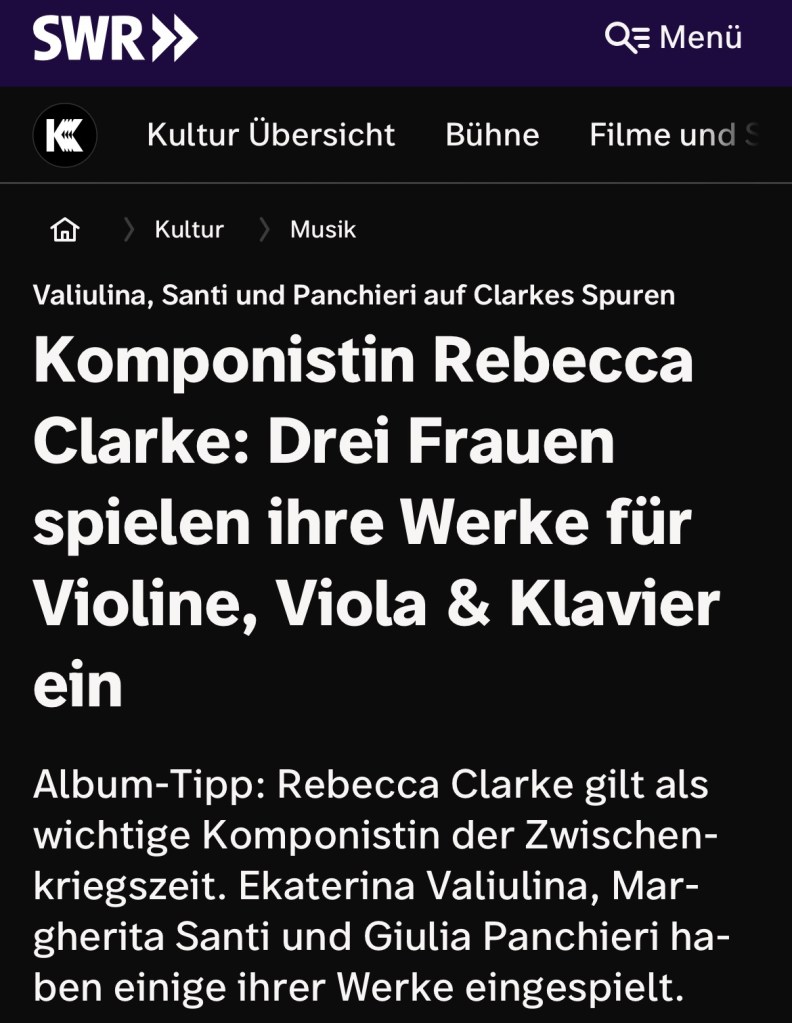
Composer Rebecca Clarke: Three Women Record Her Works for Violin, Viola & Piano
Album Recommendation: Rebecca Clarke is regarded as an important composer of the interwar period. Ekaterina Valiulina, Margherita Santi, and Giulia Panchieri have recorded several of her works.
Very gently, the viola part feels its way toward the softly resonating tones of the piano.
“I’ll Bid My Heart Be Still,” it sings — I will bid my heart be still. It is an old Scottish melody. To these traditional sounds, Rebecca Clarke adds a free piano accompaniment that seems to reflect upon the melody itself — moving through its own unique loops and turns.
When listening, one is reminded of devout religious chorales and folk songs just as much as of impressionistic and even more modern sounds. The solemn, steady character of the melody merges with pentatonic scales and experimental harmonies in the accompaniment.
It is precisely this blend that gives Rebecca Clarke’s compositions their distinctive sound. In the booklet accompanying the album by Ekaterina Valiulina, Margherita Santi, and Giulia Panchieri, it states that Clarke’s music “observes the world, perceives the invisible, and understands it — yet chooses not to interfere.”
Violinist Ekaterina Valiulina, violist Giulia Panchieri, and pianist Margherita Santi aim to create a lasting tribute to Rebecca Clarke’s music for violin, viola, and piano with their album. They perform works from all periods of the composer’s career — the earliest dating from 1909, the latest from the 1940s.
Although Clarke lived until 1979, she stopped composing after her marriage to pianist James Friskin in 1944. That is why the Trio Dumka is considered one of her last known works. In it, memories of Czech dances merge with avant-garde harmonies.
One of her main works is the three-movement Sonata for Viola, written in 1918 during a concert tour — for herself. When she submitted the piece to a competition a year later, the judges thought it was the work of Maurice Ravel.
So vibrant was its harmonic inventiveness, so rich its dynamic color — that they could hardly imagine such brilliant music had been composed by a woman. They even considered it more likely that “Rebecca Clarke” was the pseudonym of a male composer.
In their interpretation, Giulia Panchieri and Margherita Santi particularly highlight the capricious, unrestrained character that the composer envisioned in the interplay between viola and piano.
Time and again, Rebecca Clarke draws on influences from traditional Far Eastern music, as well as Irish, English, and Scottish folk melodies. Her Passacaglia on an Old English Tune, attributed to Thomas Tallis, was likely composed for the funeral of her close friend Frank Bridge.
Panchieri and Santi present this dark, solemn music on stage as if handling a precious object. They follow the score with deep admiration, yet manage to make their voices sound as though the melodies were arising from completely spontaneous emotion.
It is hard to comprehend how this music could have been lost and forgotten for decades. All the more important, then, are sensitive recordings like this one — each new interpretation further strengthens the legacy of this remarkable composer.
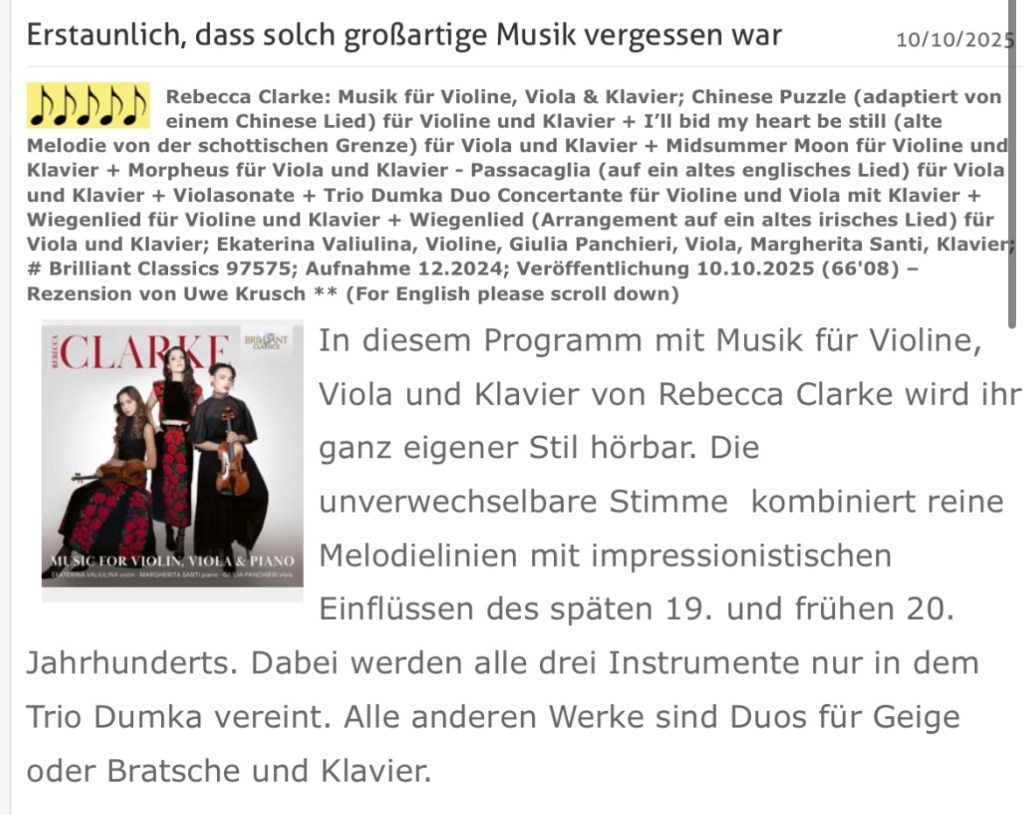
In this program with music for violin, viola and piano by Rebecca Clarke, her very own style becomes audible. Her unmistakable voice combines pure melodic lines with impressionistic influences from the late 19th and early 20th centuries. All three instruments are only united in the trio Dumka. All other works are duos for violin or viola and piano.
Born in Great Britain 140 years ago, Rebecca Clarke also lived in the United States. During her first American tour in 1919, she composed her Sonata for Viola and Piano, one of her best works. With its pentatonic opening theme, dense harmonies, emotional intensity, and dense, rhythmically complex texture, this sonata is an example of Clarke’s personal style. Morpheus was her first major work after more than a decade of songs and miniatures. Dumka, a work for violin, viola, and piano, reflects the Eastern European folk music styles of Bartók and Martinů.
The three performers have studied the music intensively. This enables them to offer eloquent and well-formed interpretations of the Dumka Trio and the other eight pieces. Pianist Margherita Santi has already demonstrated her intelligence and musical insight in her interpretations, which are enhanced by dynamic nuances, a joy of playing, and coloration. The two string players are equally impressive in their well-crafted arrangements. In this way, they have put together an appealing portrait of Rebecca Clarke’s music.
Review by Uwe Krusch
Il termine Dumka (dal termine slavo per “pensiero” o “riflessione”) evoca il dialogo costante tra malinconia e slancio vitale, cifra poetica della musica popolare dell’Europa orientale. Clarke ne rilegge il significato attraverso la propria sensibilità modernista, fondendo linee melodiche intense a un linguaggio armonico raffinato, dove i timbri di violino, viola e pianoforte si fondono e si contrastano come voci di un’unica coscienza.
Scritta nel 1941, Dumka rappresenta uno dei momenti più maturi della produzione cameristica di Clarke: una meditazione sull’identità e sul dialogo interiore, che si apre con un canto malinconico e si espande in una serie di contrasti ritmici e tematici, fino a dissolversi in un finale sospeso.
Nel video RSI, la regia valorizza la dimensione intimista e contemplativa dell’opera, sottolineando i gesti di ascolto reciproco tra gli interpreti, in un equilibrio perfetto tra luce e ombra, tra tensione e quiete.
Con questo nuovo progetto discografico, Rebecca Clarke: Music for Violin, Viola and Piano, si restituisce voce a una delle figure più significative – e troppo a lungo dimenticate – della musica del Novecento, pioniera nel coniugare profondità emotiva e libertà formale. Dumka è forse il suo ritratto più sincero: un pensiero che si fa suono, un dialogo che continua a parlare al presente.
—
RSI Musica:
Album:
—
The term Dumka (from the Slavic word for “thought” or “reflection”) evokes the constant dialogue between melancholy and vital impulse — a poetic hallmark of Eastern European folk music. Clarke reinterprets this idea through her own modernist sensibility, blending intense melodic lines with refined harmonic language, where the timbres of violin, viola, and piano merge and oppose each other like voices of a single consciousness.
Composed in 1941, Dumka stands among the most mature achievements of Clarke’s chamber output: a meditation on identity and inner dialogue that opens with a melancholy song and unfolds through a series of rhythmic and thematic contrasts, eventually dissolving into a suspended, introspective ending.
In the RSI video, the direction enhances the intimate and contemplative nature of the work, highlighting the performers’ gestures of mutual listening in a perfect balance between light and shadow, tension and stillness.
With this new recording project, Rebecca Clarke: Music for Violin, Viola and Piano, voice is given back to one of the most significant — and too long forgotten — figures of twentieth-century music, a pioneer in uniting emotional depth and formal freedom. Dumka is perhaps her most truthful portrait: a thought transformed into sound, a dialogue that continues to speak to the present.
L’ottava edizione di Herbst Musicaux Festival ha portato a Verona una stagione di concerti e incontri che hanno avuto come filo conduttore la metamorfosi: la capacità della musica di trasformare chi ascolta, chi interpreta e i luoghi stessi che la ospitano.
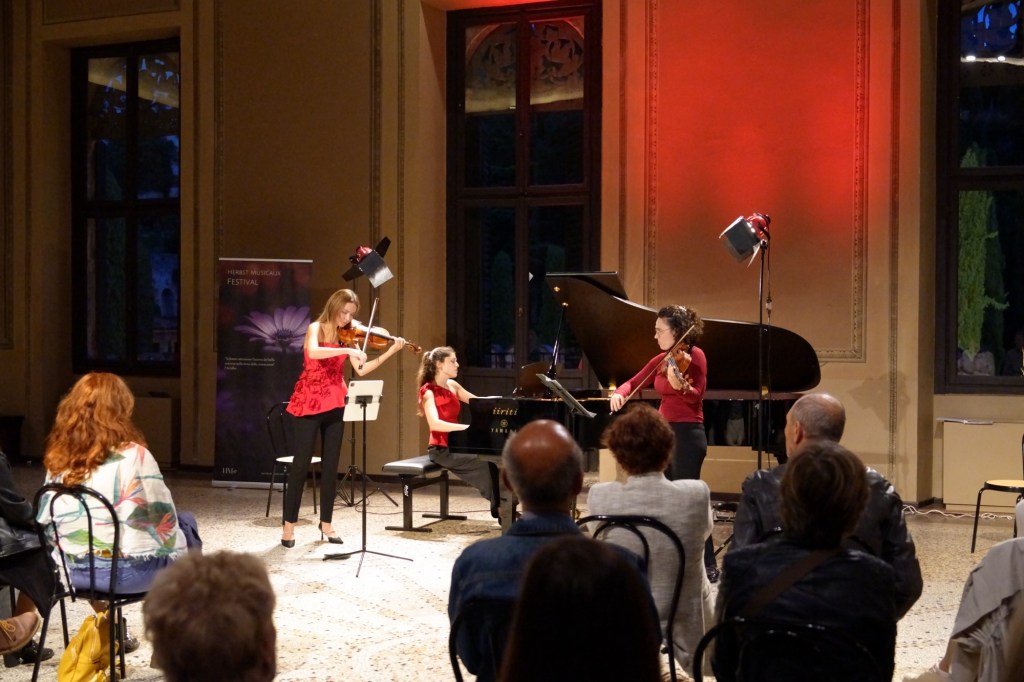
Dall’eleganza del Salone di Palazzo e Giardino Giusti alla magia del Chiostro di San Giorgio in Braida, il festival ha intrecciato suoni, parole e immagini in un percorso che ha unito repertori classici e contemporanei, celebri capolavori e scoperte preziose.

Gli artisti internazionali che hanno preso parte al festival hanno portato con sé non solo il loro talento, ma anche storie, repertori e prospettive uniche, tessendo insieme un mosaico di emozioni che ha reso questa edizione indimenticabile.
Ora che il sipario si è chiuso, rimane l’eco di un percorso che ha trasformato anche noi, pubblico e organizzatori, ricordandoci quanto la musica possa essere ponte tra passato e presente, tra intimità e collettività, tra sé e l’altro.
Today marks a very special moment: the release of our new album dedicated to Rebecca Clarke (1886–1979), one of the most fascinating and overlooked voices of the 20th century.
Often described by Arthur Rubinstein as “the glorious Rebecca Clarke”, she was a pioneering violist and composer who carved her own path in a world where women were rarely recognized as serious composers. Clarke’s music is strikingly original, weaving impressionistic colors, British folk echoes, and a deep poetic intensity that feels both timeless and modern.

This recording brings together some of Clarke’s most representative chamber works:
Sonata for Viola and Piano (1919) – her best-known piece, a cornerstone of the viola repertoire, bold, lyrical, and full of contrasts. Morpheus (1917) – one of Clarke’s earliest works, once presented under a male pseudonym to avoid prejudice, ethereal and dreamlike. Shorter works for violin and piano and viola and piano, some inspired by traditional melodies from the British Isles, filled with folkloric resonance. Dumka – a duo concertante for violin, viola, and piano, closing the program with an evocative mix of intimacy and vigor.
Performers:
🎻 Ekaterina Valiulina, violin
🎻 Giulia Panchieri, viola
🎹 Margherita Santi, piano
Sound engineer: Stefano Ligoratti
Recorded in Milan, December 2024, with a Steinway & Sons piano.
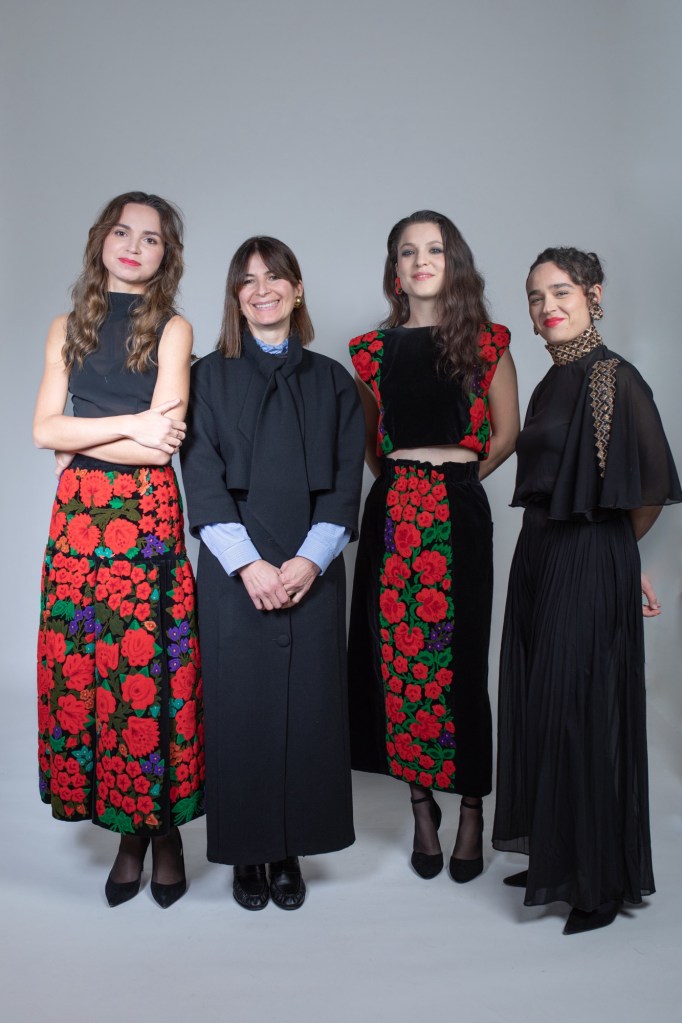
A special dimension of this project comes from the collaboration with Milijana Jankovic Copenhagen, a sustainable luxury brand that blends contemporary design with traditional Eastern European craftsmanship. For the album’s visual identity, Jankovic created garments that echo the textures, atmospheres, and folkloric undertones present in Clarke’s music. Paired with the evocative photography of Lisa Habets and the artistry of Alessandra Macrì in styling and makeup, the result is a dialogue between sound and vision — where fashion, music, and culture converge to reflect Clarke’s spirit of transformation.

The album is available worldwide from October 1, 2025 on Brilliant Classics and all major streaming platforms, including Spotify, Apple Music, and Amazon Music.
🎧 Listen here: https://open.spotify.com/album/4TF1UBiR3qcHb4QaZMEKMr?si=qgrN9S8dSSCpixTJk3IUUw
Rebecca Clarke’s music is a dream rediscovered. We invite you to step into her world — intimate, powerful and evocative.
The first track of the new upcoming album REBECCA CLARKE – Music for violin, viola and piano is out on RSI musica YouTube channel.
For violin and piano, is a fascinating and mysterious piece that imitates the sounds of the night, transporting us into a suspended, intimate and poetic landscape.
 Margherita Santi