Since Rebecca Clarke’s Viola Sonata entered the twentieth-century repertoire it’s enjoyed many fine and very divergent recordings. This latest version from the youthful Italian team of Giulia Panchieri (viola) and Margherita Santi (piano) exemplifies a trend for stable tempi that ensure the work takes around 22-23 minutes, as do, to take a couple at random, the pairings of Tabea Zimmermann and Kirill Gerstein on Myrios Classics and Judith Ingolfsson and Vladimir Stoupel on Oehms. This sensible approach, therefore, avoids the extremes of Matthew Jones (20:30) and Philip Dukes (27 minutes), both of them on Naxos. I mention this only to suggest that the sonata has encouraged a gratifyingly wide range of interpretive stances though also to imply my preference.

As well as their pragmatic tempi, the Italian pairing evoke the impressionistic as well as the declamatory elements of the Sonata very well. Santi’s piano chording is evocative and Panchieri’s tone is well-centred and capable of folkloric extension in the sonata’s pastoral moments. Rightly they take the central Scherzo at a vivid tempo, their ensemble is solid and they bring a fluid approach to the finale, etching its episodes with youthful verve, whether in the opening Adagio or in the vitality of the Allegro. I’m not shifting my allegiance from the Zimmermann-Gerstein team but this is a welcome addition to the discography.

The album is devoted to the music for violin, viola and piano so contains a number of smaller pieces from two main periods of her compositional life – 1913-24 and 1941-44. It was probably her focus on chamber music – she was a leading violist and made a recording as such in the 1920s – and on song composition that led her away from writing orchestral music but what she wrote has great distinction. There’s the evocative Lullaby for violin, played with warmth by Ekaterina Valiulina and the quietly melancholic Lullaby (arrangement of an ancient Irish Tune) for the viola. The sliver of a Chinese Puzzle explores the vogue for chinoiserie and Midsummer Moon exudes Vaughan Williams-like flourishes.

The works from the 1940s date from her emigration to America. The Passacaglia on an Old English Tune is noble and elevated whilst the lovely I’ll Bid My Heart Be Still is as moving as ever and, as here, all the better when not played too quickly. The three musicians finally come together in the Trio Dumka, a lively, colourful work that explores the dumka without undue seriousness but ends quietly and a touch withdrawn. Given the date of composition I’ve always wondered whether it was intended as a tribute to Dvořák, the centenary of whose birth fell that year.

This is an attractive contribution to Clarke’s increasing representation on disc. If the recording quality is rather too up-front for my tastes, the performances provide sensitivity and athleticism. Individual allegiances may lie elsewhere (Tabea Zimmermann for the Sonata, Lorraine McAslan for the violin works) but this will make a good and relatively inexpensive entrée for those unfamiliar with her work.

Jonathan Woolf
Listen to the radio show on ARD audiothek: https://www.ardaudiothek.de/episode/urn:ard:section:89cd6bebb480eb32/

Article here: https://www.swr.de/kultur/musik/rebecca-clarke-musik-fuer-violine-viola-klavier-100.html

A new feature from SWR Kultur:

https://www.swr.de/kultur/musik/rebecca-clarke-musik-fuer-violine-viola-klavier-100.html

Valiulina, Santi and Panchieri Following Clarke’s Footsteps

Composer Rebecca Clarke: Three Women Record Her Works for Violin, Viola & Piano

Album Recommendation: Rebecca Clarke is regarded as an important composer of the interwar period. Ekaterina Valiulina, Margherita Santi, and Giulia Panchieri have recorded several of her works.

Very gently, the viola part feels its way toward the softly resonating tones of the piano.

“I’ll Bid My Heart Be Still,” it sings — I will bid my heart be still. It is an old Scottish melody. To these traditional sounds, Rebecca Clarke adds a free piano accompaniment that seems to reflect upon the melody itself — moving through its own unique loops and turns.

When listening, one is reminded of devout religious chorales and folk songs just as much as of impressionistic and even more modern sounds. The solemn, steady character of the melody merges with pentatonic scales and experimental harmonies in the accompaniment.

One of the most significant British composers of the interwar years

It is precisely this blend that gives Rebecca Clarke’s compositions their distinctive sound. In the booklet accompanying the album by Ekaterina Valiulina, Margherita Santi, and Giulia Panchieri, it states that Clarke’s music “observes the world, perceives the invisible, and understands it — yet chooses not to interfere.”

Violinist Ekaterina Valiulina, violist Giulia Panchieri, and pianist Margherita Santi aim to create a lasting tribute to Rebecca Clarke’s music for violin, viola, and piano with their album. They perform works from all periods of the composer’s career — the earliest dating from 1909, the latest from the 1940s.

Although Clarke lived until 1979, she stopped composing after her marriage to pianist James Friskin in 1944. That is why the Trio Dumka is considered one of her last known works. In it, memories of Czech dances merge with avant-garde harmonies.

Contemporaries believed Rebecca Clarke to be a male composer

One of her main works is the three-movement Sonata for Viola, written in 1918 during a concert tour — for herself. When she submitted the piece to a competition a year later, the judges thought it was the work of Maurice Ravel.

So vibrant was its harmonic inventiveness, so rich its dynamic color — that they could hardly imagine such brilliant music had been composed by a woman. They even considered it more likely that “Rebecca Clarke” was the pseudonym of a male composer.

In their interpretation, Giulia Panchieri and Margherita Santi particularly highlight the capricious, unrestrained character that the composer envisioned in the interplay between viola and piano.

A sensitive recording honoring Rebecca Clarke’s legacy

Time and again, Rebecca Clarke draws on influences from traditional Far Eastern music, as well as Irish, English, and Scottish folk melodies. Her Passacaglia on an Old English Tune, attributed to Thomas Tallis, was likely composed for the funeral of her close friend Frank Bridge.

Panchieri and Santi present this dark, solemn music on stage as if handling a precious object. They follow the score with deep admiration, yet manage to make their voices sound as though the melodies were arising from completely spontaneous emotion.

It is hard to comprehend how this music could have been lost and forgotten for decades. All the more important, then, are sensitive recordings like this one — each new interpretation further strengthens the legacy of this remarkable composer.

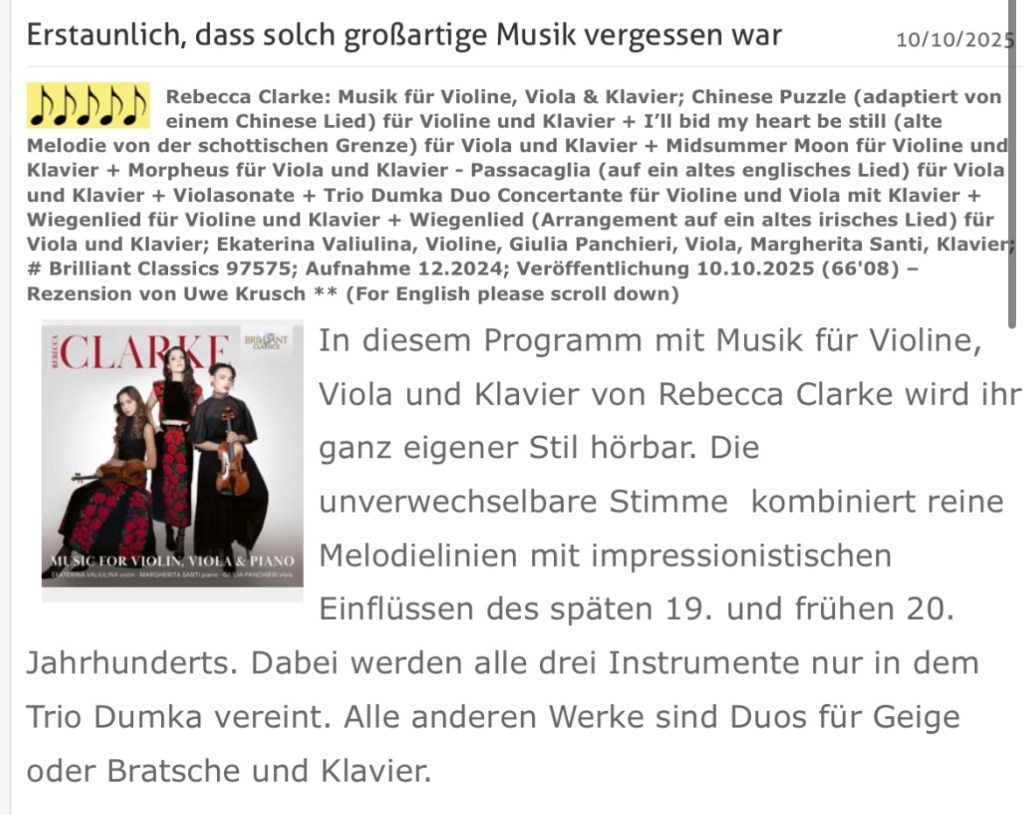
In this program with music for violin, viola and piano by Rebecca Clarke, her very own style becomes audible. Her unmistakable voice combines pure melodic lines with impressionistic influences from the late 19th and early 20th centuries. All three instruments are only united in the trio Dumka. All other works are duos for violin or viola and piano.

Born in Great Britain 140 years ago, Rebecca Clarke also lived in the United States. During her first American tour in 1919, she composed her Sonata for Viola and Piano, one of her best works. With its pentatonic opening theme, dense harmonies, emotional intensity, and dense, rhythmically complex texture, this sonata is an example of Clarke’s personal style. Morpheus was her first major work after more than a decade of songs and miniatures. Dumka, a work for violin, viola, and piano, reflects the Eastern European folk music styles of Bartók and Martinů.

The three performers have studied the music intensively. This enables them to offer eloquent and well-formed interpretations of the Dumka Trio and the other eight pieces. Pianist Margherita Santi has already demonstrated her intelligence and musical insight in her interpretations, which are enhanced by dynamic nuances, a joy of playing, and coloration. The two string players are equally impressive in their well-crafted arrangements. In this way, they have put together an appealing portrait of Rebecca Clarke’s music.

Review by Uwe Krusch

Il termine Dumka (dal termine slavo per “pensiero” o “riflessione”) evoca il dialogo costante tra malinconia e slancio vitale, cifra poetica della musica popolare dell’Europa orientale. Clarke ne rilegge il significato attraverso la propria sensibilità modernista, fondendo linee melodiche intense a un linguaggio armonico raffinato, dove i timbri di violino, viola e pianoforte si fondono e si contrastano come voci di un’unica coscienza.

Scritta nel 1941, Dumka rappresenta uno dei momenti più maturi della produzione cameristica di Clarke: una meditazione sull’identità e sul dialogo interiore, che si apre con un canto malinconico e si espande in una serie di contrasti ritmici e tematici, fino a dissolversi in un finale sospeso.

Nel video RSI, la regia valorizza la dimensione intimista e contemplativa dell’opera, sottolineando i gesti di ascolto reciproco tra gli interpreti, in un equilibrio perfetto tra luce e ombra, tra tensione e quiete.

Con questo nuovo progetto discografico, Rebecca Clarke: Music for Violin, Viola and Piano, si restituisce voce a una delle figure più significative – e troppo a lungo dimenticate – della musica del Novecento, pioniera nel coniugare profondità emotiva e libertà formale. Dumka è forse il suo ritratto più sincero: un pensiero che si fa suono, un dialogo che continua a parlare al presente.

RSI Musica:

Album:

The term Dumka (from the Slavic word for “thought” or “reflection”) evokes the constant dialogue between melancholy and vital impulse — a poetic hallmark of Eastern European folk music. Clarke reinterprets this idea through her own modernist sensibility, blending intense melodic lines with refined harmonic language, where the timbres of violin, viola, and piano merge and oppose each other like voices of a single consciousness.

Composed in 1941, Dumka stands among the most mature achievements of Clarke’s chamber output: a meditation on identity and inner dialogue that opens with a melancholy song and unfolds through a series of rhythmic and thematic contrasts, eventually dissolving into a suspended, introspective ending.

In the RSI video, the direction enhances the intimate and contemplative nature of the work, highlighting the performers’ gestures of mutual listening in a perfect balance between light and shadow, tension and stillness.

With this new recording project, Rebecca Clarke: Music for Violin, Viola and Piano, voice is given back to one of the most significant — and too long forgotten — figures of twentieth-century music, a pioneer in uniting emotional depth and formal freedom. Dumka is perhaps her most truthful portrait: a thought transformed into sound, a dialogue that continues to speak to the present.

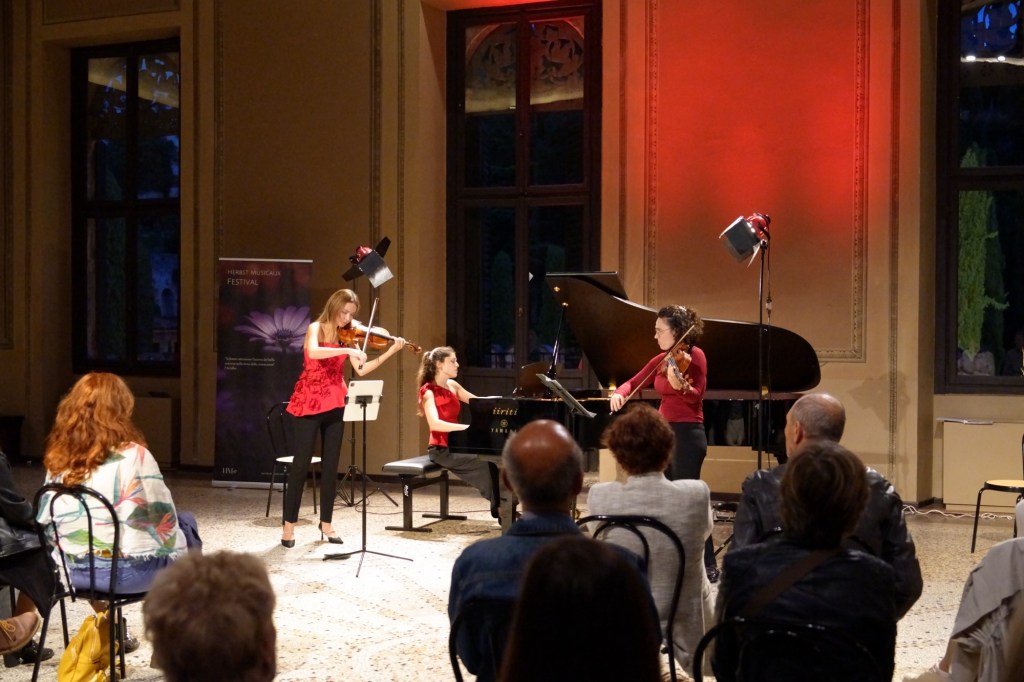
L’ottava edizione di Herbst Musicaux Festival ha portato a Verona una stagione di concerti e incontri che hanno avuto come filo conduttore la metamorfosi: la capacità della musica di trasformare chi ascolta, chi interpreta e i luoghi stessi che la ospitano.

Dall’eleganza del Salone di Palazzo e Giardino Giusti alla magia del Chiostro di San Giorgio in Braida, il festival ha intrecciato suoni, parole e immagini in un percorso che ha unito repertori classici e contemporanei, celebri capolavori e scoperte preziose.

Gli artisti internazionali che hanno preso parte al festival hanno portato con sé non solo il loro talento, ma anche storie, repertori e prospettive uniche, tessendo insieme un mosaico di emozioni che ha reso questa edizione indimenticabile.

Ora che il sipario si è chiuso, rimane l’eco di un percorso che ha trasformato anche noi, pubblico e organizzatori, ricordandoci quanto la musica possa essere ponte tra passato e presente, tra intimità e collettività, tra sé e l’altro.

Today marks a very special moment: the release of our new album dedicated to Rebecca Clarke (1886–1979), one of the most fascinating and overlooked voices of the 20th century.

Often described by Arthur Rubinstein as “the glorious Rebecca Clarke”, she was a pioneering violist and composer who carved her own path in a world where women were rarely recognized as serious composers. Clarke’s music is strikingly original, weaving impressionistic colors, British folk echoes, and a deep poetic intensity that feels both timeless and modern.

This recording brings together some of Clarke’s most representative chamber works:

Sonata for Viola and Piano (1919) – her best-known piece, a cornerstone of the viola repertoire, bold, lyrical, and full of contrasts. Morpheus (1917) – one of Clarke’s earliest works, once presented under a male pseudonym to avoid prejudice, ethereal and dreamlike. Shorter works for violin and piano and viola and piano, some inspired by traditional melodies from the British Isles, filled with folkloric resonance. Dumka – a duo concertante for violin, viola, and piano, closing the program with an evocative mix of intimacy and vigor.

Performers:

🎻 Ekaterina Valiulina, violin

🎻 Giulia Panchieri, viola

🎹 Margherita Santi, piano

Sound engineer: Stefano Ligoratti

Recorded in Milan, December 2024, with a Steinway & Sons piano.

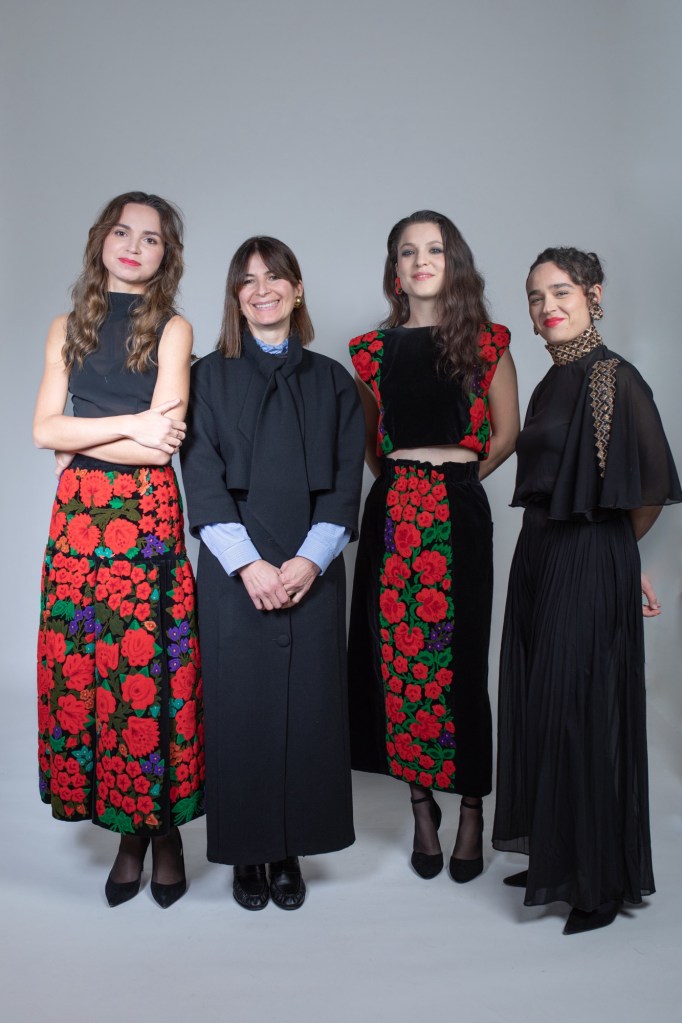
A special dimension of this project comes from the collaboration with Milijana Jankovic Copenhagen, a sustainable luxury brand that blends contemporary design with traditional Eastern European craftsmanship. For the album’s visual identity, Jankovic created garments that echo the textures, atmospheres, and folkloric undertones present in Clarke’s music. Paired with the evocative photography of Lisa Habets and the artistry of Alessandra Macrì in styling and makeup, the result is a dialogue between sound and vision — where fashion, music, and culture converge to reflect Clarke’s spirit of transformation.

The album is available worldwide from October 1, 2025 on Brilliant Classics and all major streaming platforms, including Spotify, Apple Music, and Amazon Music.

🎧 Listen here: https://open.spotify.com/album/4TF1UBiR3qcHb4QaZMEKMr?si=qgrN9S8dSSCpixTJk3IUUw

Rebecca Clarke’s music is a dream rediscovered. We invite you to step into her world — intimate, powerful and evocative.

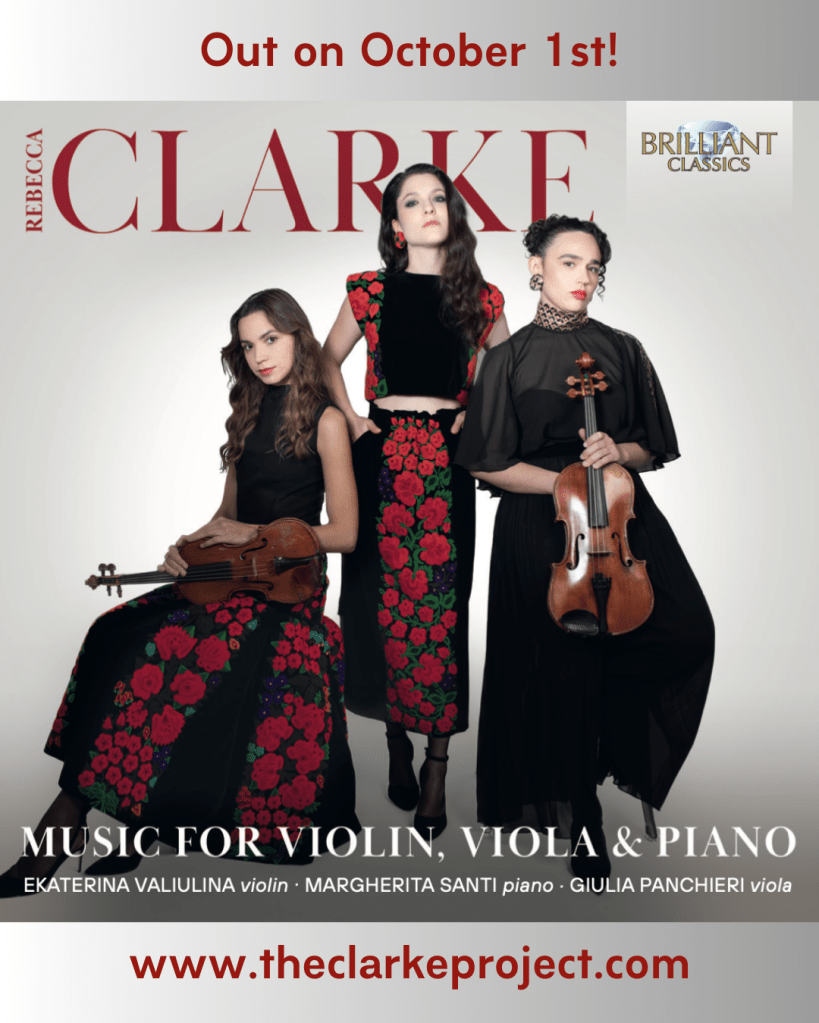
On the 1st of October the album Rebecca Clarke will be published by Brilliant Classic on all streaming platforms and will be available in shops.

This album is dedicated to the music of Rebecca Clarke (1886–1979), one of the most remarkable and overlooked composers of the 20th century. A pioneering violist and composer at a time when women were rarely recognized in the professional music world, Clarke left us a body of work that is at once intimate, daring, and profoundly moving.

The recording brings together some of her most significant chamber and piano works, offering listeners a journey through her unique sound world: rich harmonies influenced by late Romanticism, the impressionistic colors of Debussy and Ravel, and a strong, personal voice that transcends categories.

Clarke’s music often reflects her life between England and America, her career as a professional violist, and her deep sensitivity to poetry and atmosphere. The works on this album highlight her versatility—from lyrical, song-like lines to bold rhythmic writing—and reaffirm her place among the most important composers of her generation.

http://www.theclarkeproject.com

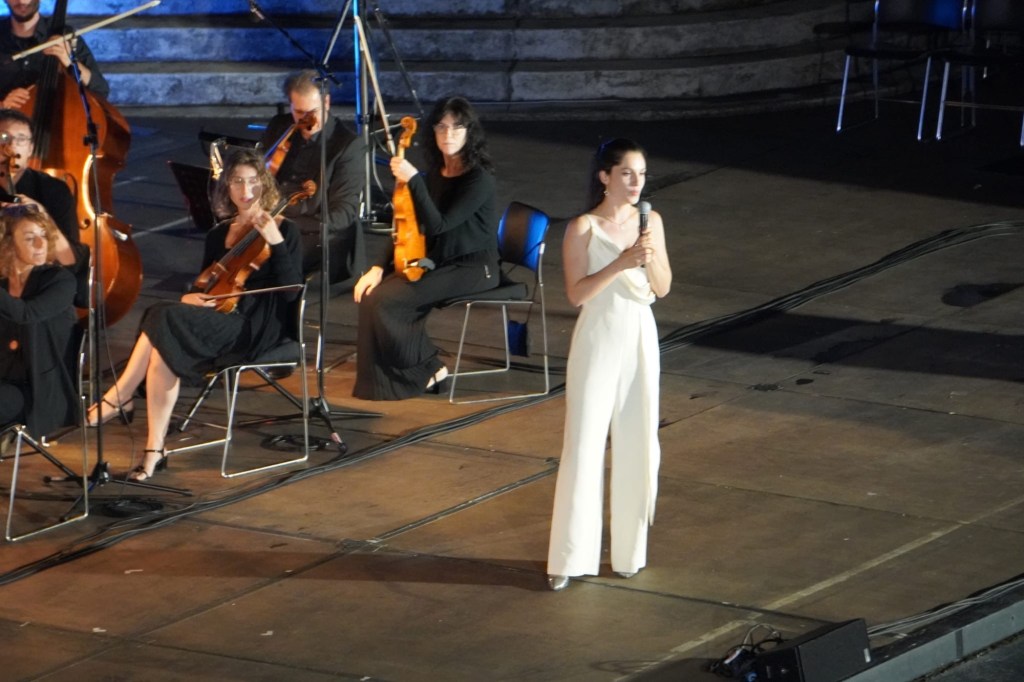
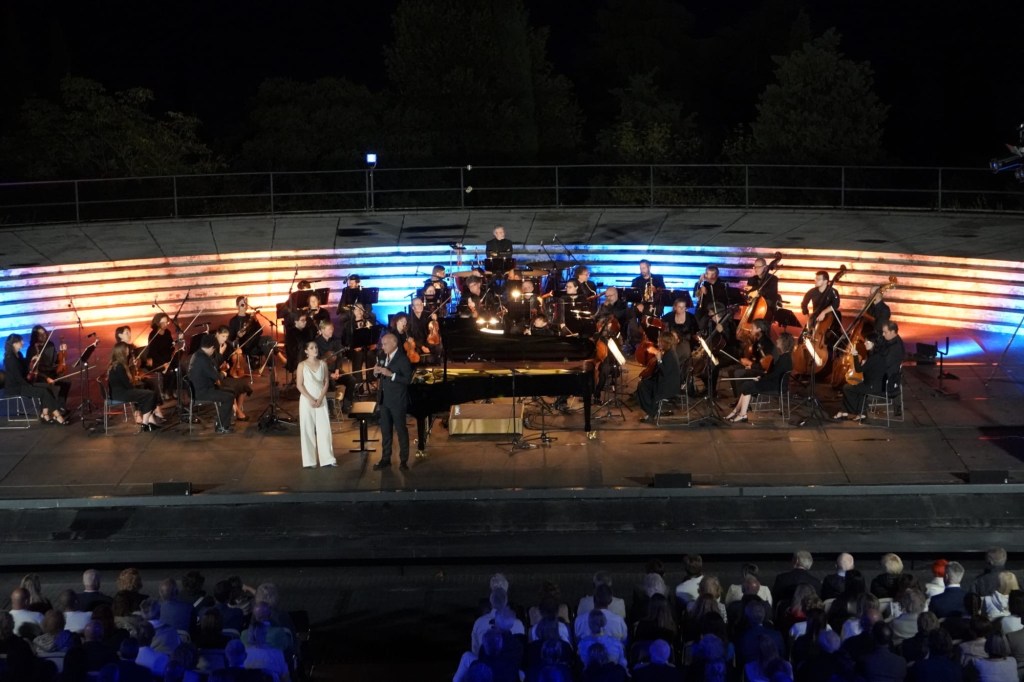
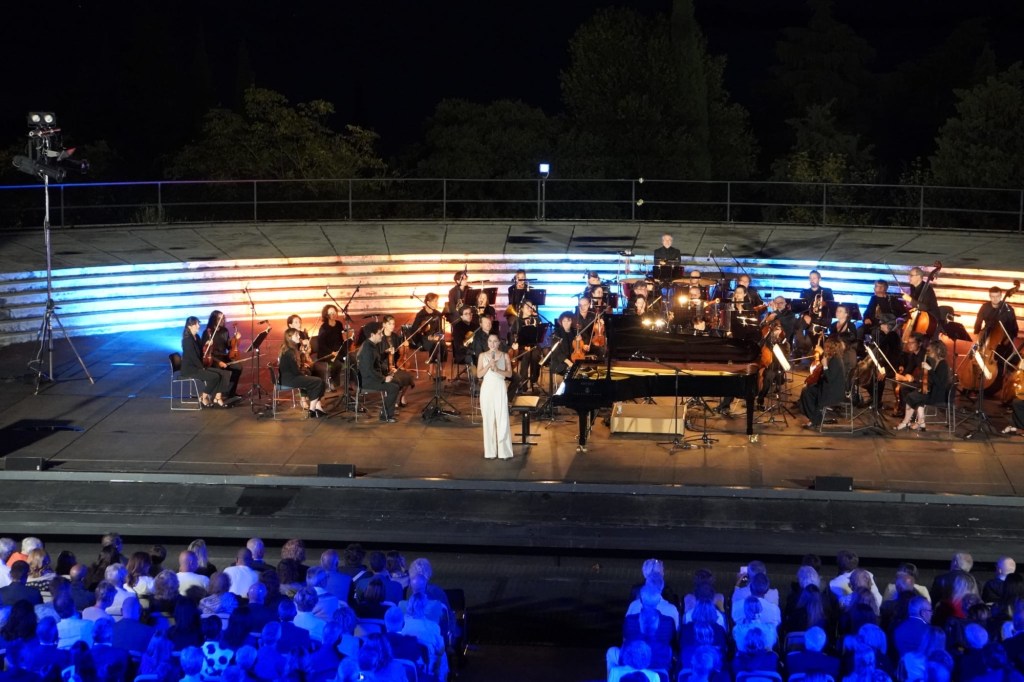
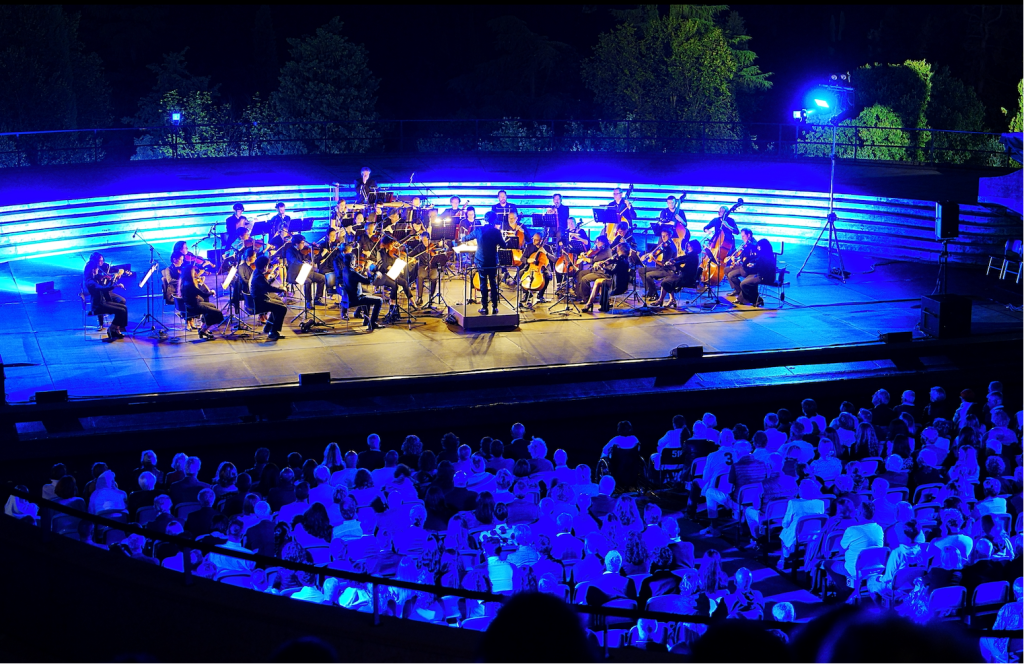
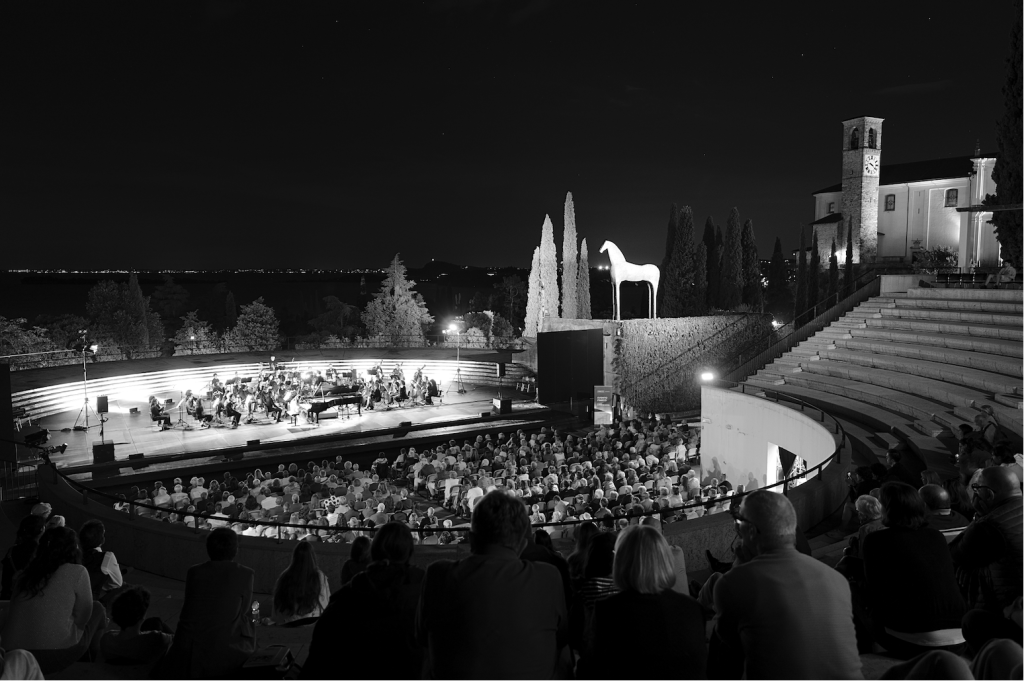
It was a true honor to serve as presenter at the Vittoriale degli Italiani, the historic home of Gabriele d’Annunzio, for a concert featuring the Haydn Orchester. Introducing the evening and speaking directly to such an attentive audience in this remarkable setting was a memorable experience—an encounter where music, history, and place resonated together.

È stato un vero onore presentare il concerto al Vittoriale degli Italiani, storica dimora di Gabriele d’Annunzio, con protagonista la Haydn Orchester. Introdurre la serata e dialogare con un pubblico così attento in un contesto tanto suggestivo è stata un’esperienza memorabile, in cui musica, storia e luogo si sono intrecciati in perfetta armonia.

Photography Enrico Santi

Join the next events of the festival!

http://www.icmfgardalake.com